

Brush goes in. Usable ground comes out.
Scrub, saplings, and fifteen years of overgrowth ground down in a single pass — nothing to burn, nothing to haul, topsoil left where it belongs. Then grading, driveways, and drainage to finish the job.
- Free estimates
- Owner-run by James
- Illinois Valley to the Quad Cities
- 5.0 from 31 reviewsEvery one of them on Google
- 25+ years on the groundNot a new outfit
- Illinois Valley to the Quad CitiesBased in Ohio, Illinois
- Owner-runJames runs the machines
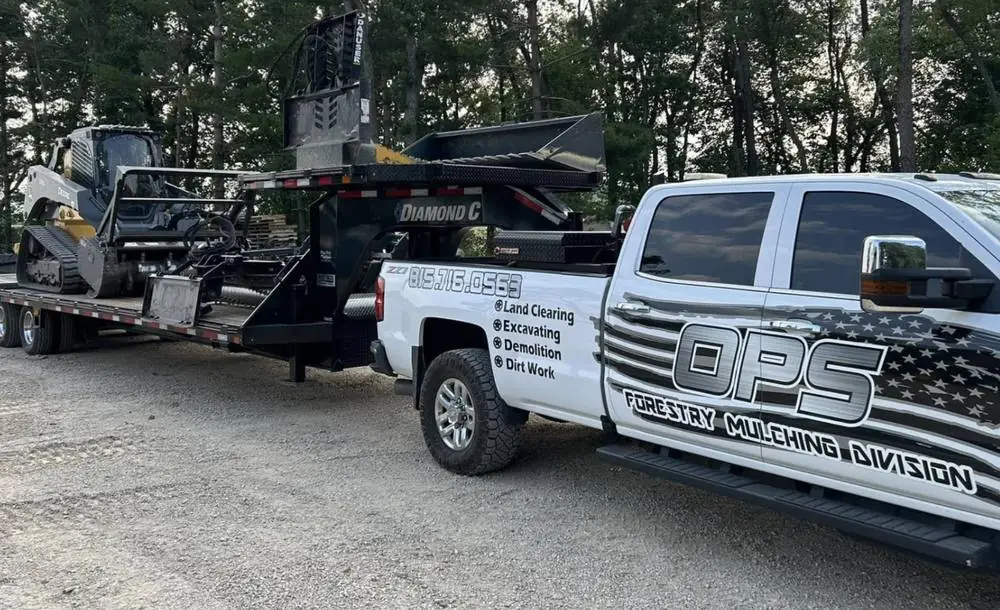
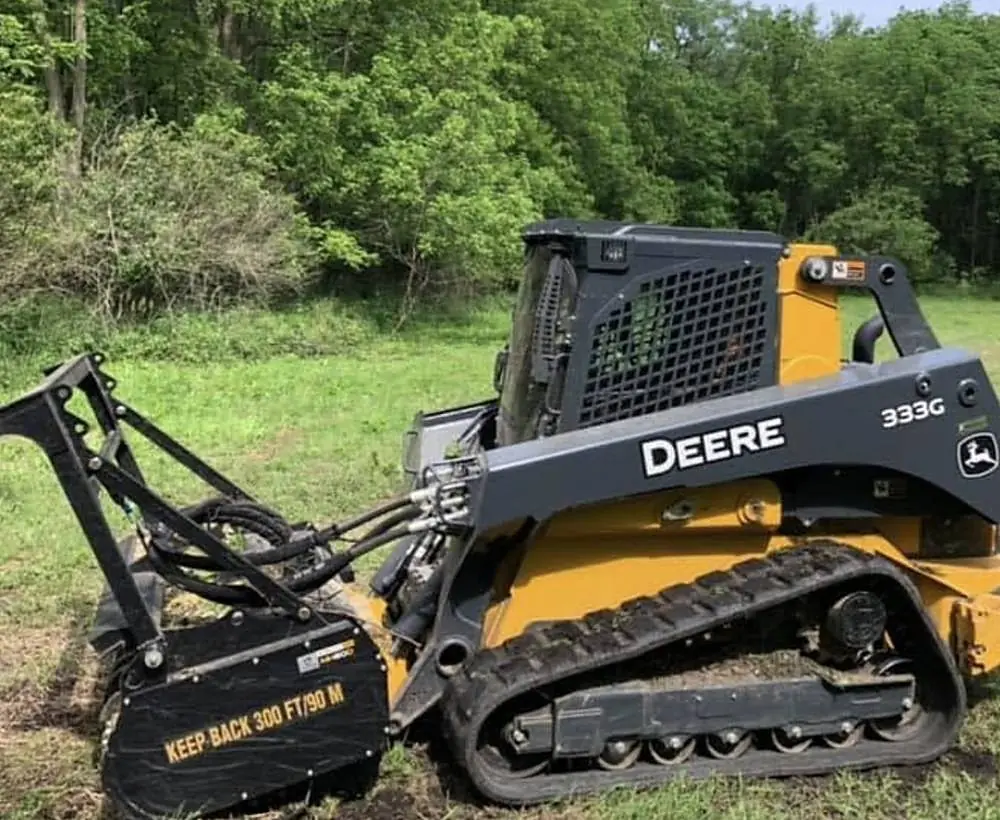
Land nobody’s touched in years
Brush so thick you can’t walk it. Fence rows swallowed by scrub. A back forty that stopped being useful a decade ago.
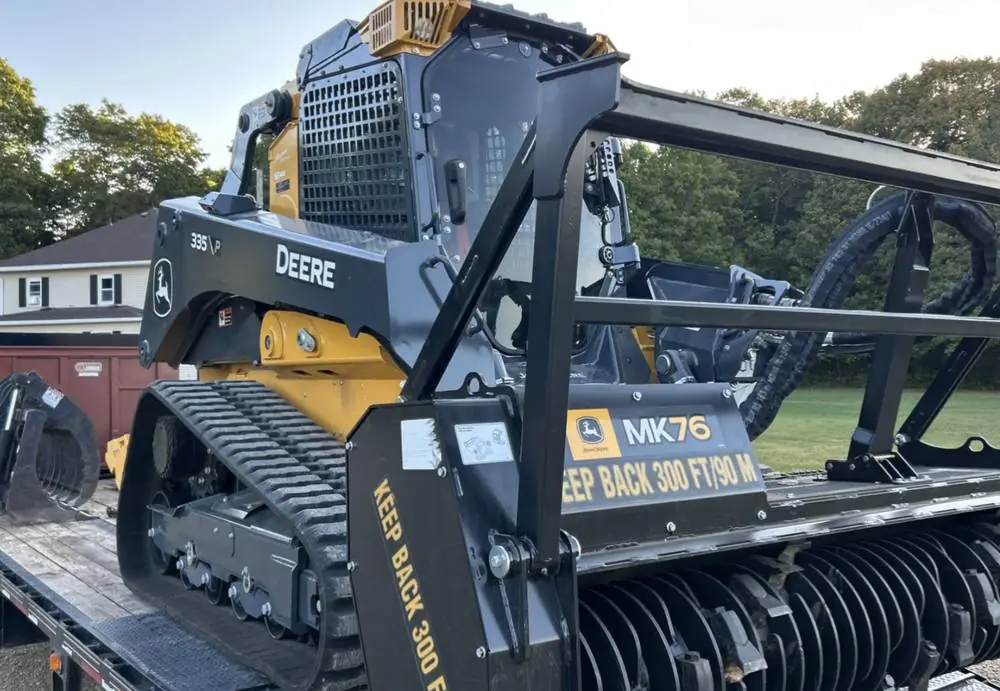
A tracked mulcher takes the standing growth down and grinds it into cover right where it fell. That’s the whole reason there’s nothing to burn and nothing to haul off, and why the topsoil comes through it intact.
From there it’s whatever the job needs — grade it flat, cut a driveway in, put the water where it belongs, or dig the pond.
Nine things we do
Most jobs start with the mulcher and end somewhere else — a driveway, a pad, a pond, a yard that finally drains.
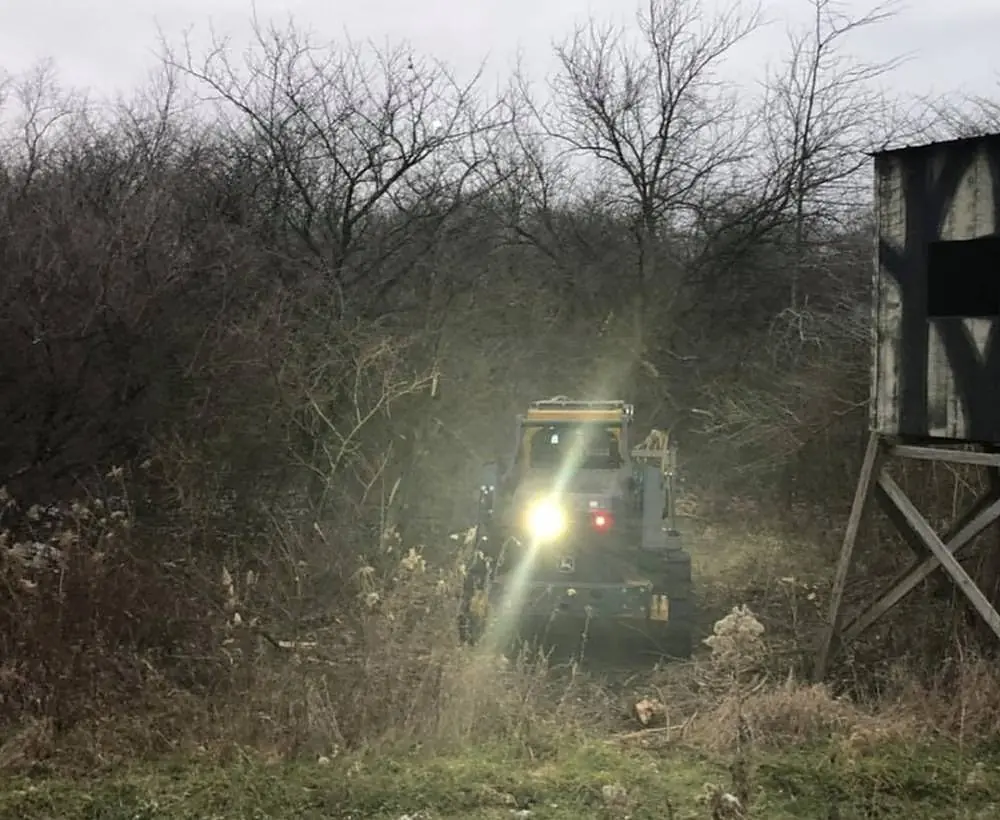 01
01Forestry Mulching
Standing brush and saplings ground into cover in one pass. Nothing burned, nothing hauled.
Learn more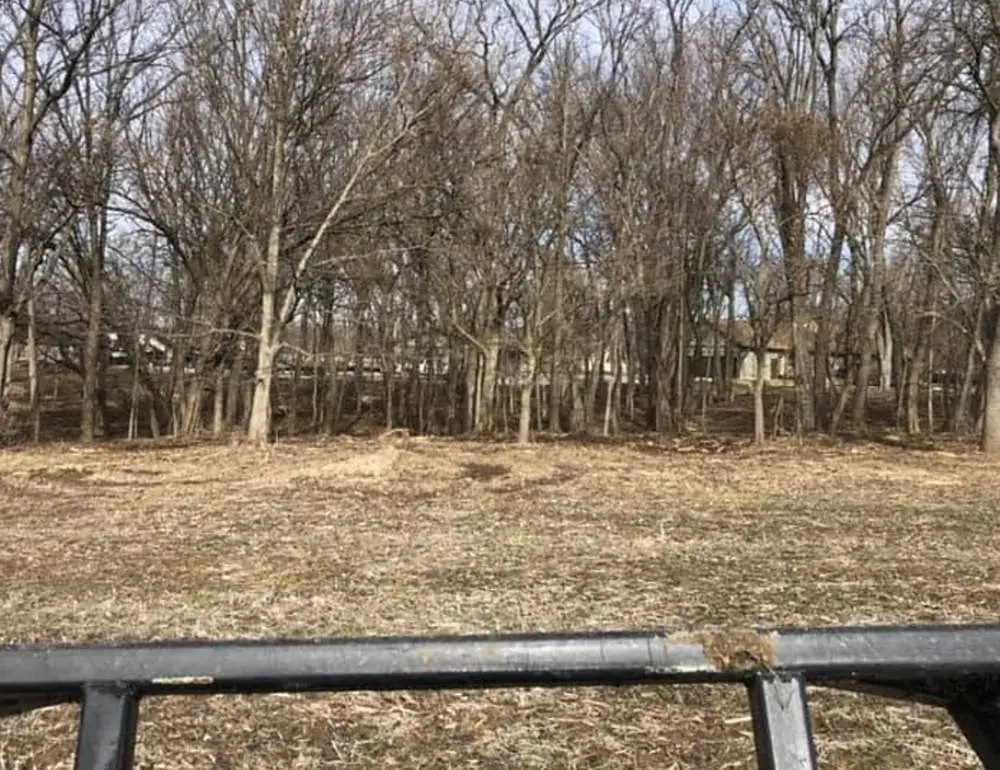 02
02Land Clearing
Wooded or neglected acreage opened back up for pasture, food plots, or a building site.
Learn more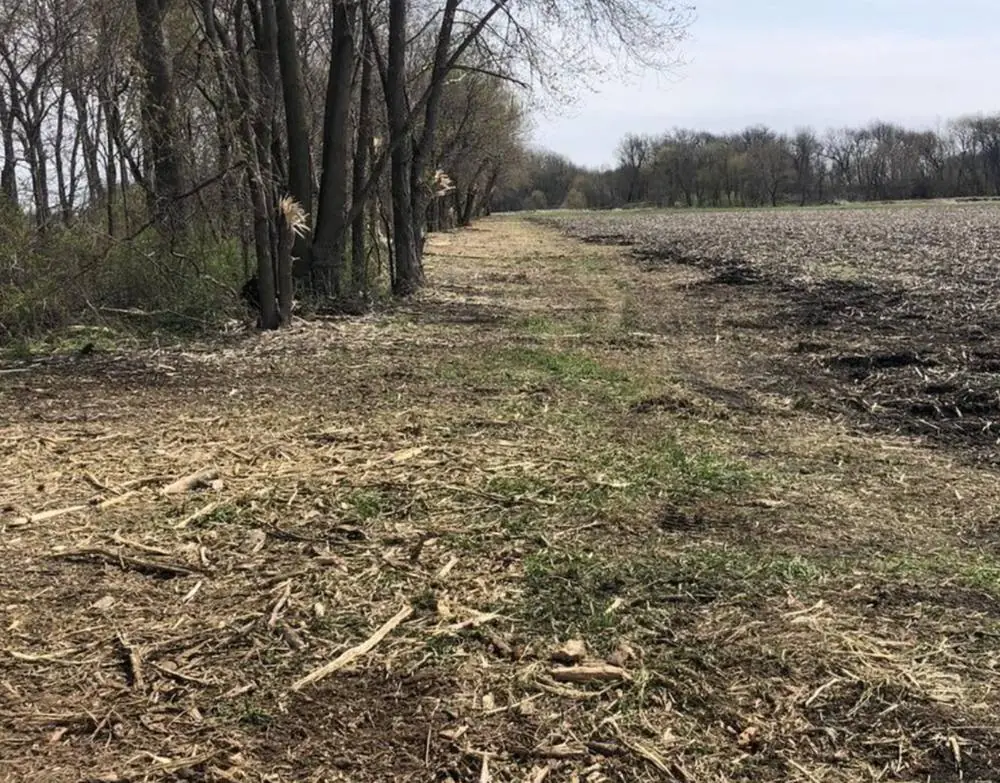 03
03Right-of-Way Clearing
Fence rows, field edges, trails and utility corridors put back to passable.
Learn more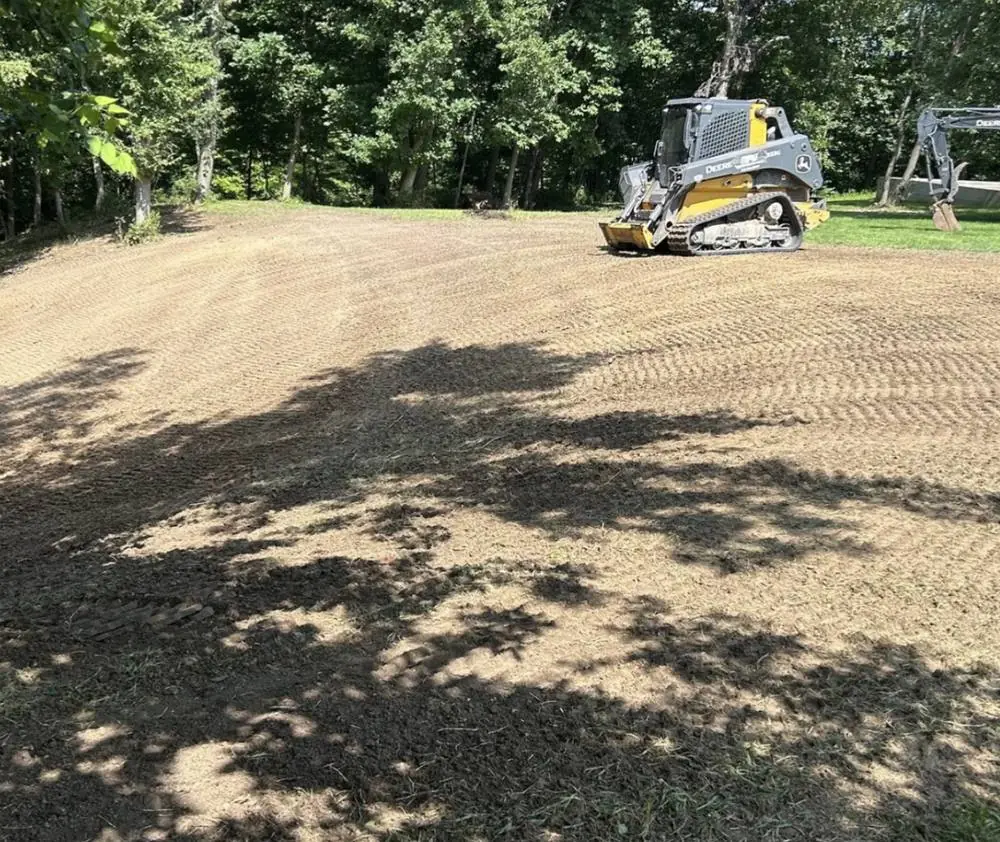 04
04Site Preparation
Ground stripped, cut and packed into a pad that will hold a building.
Learn more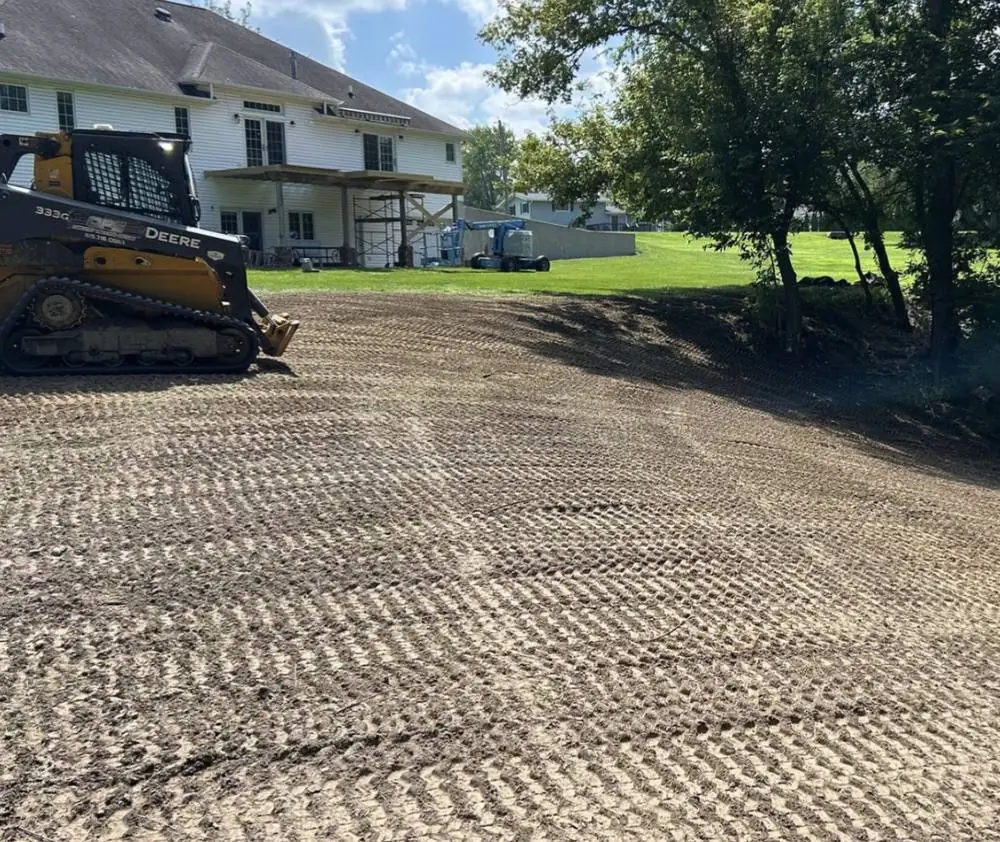 05
05Grading & Land Leveling
Low spots filled, high spots cut, water sent where you actually want it.
Learn more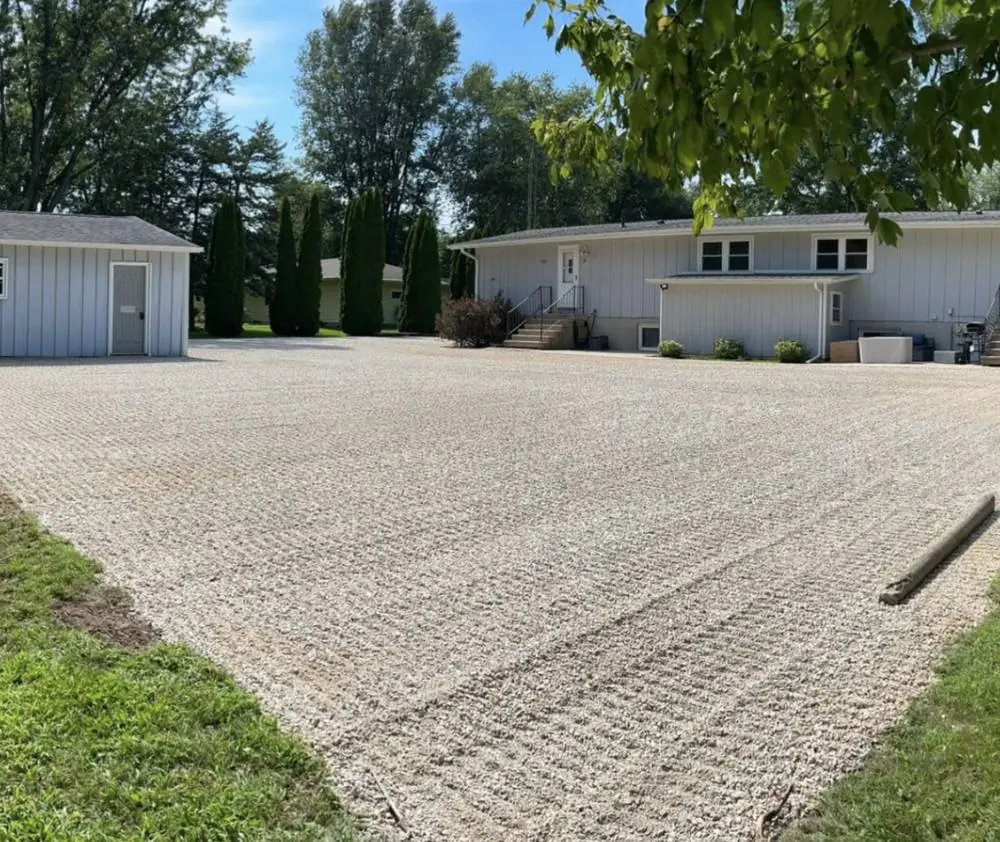 06
06Driveway & Dirt Work
New rock drives cut in, washed-out ones regraded and re-stoned.
Learn more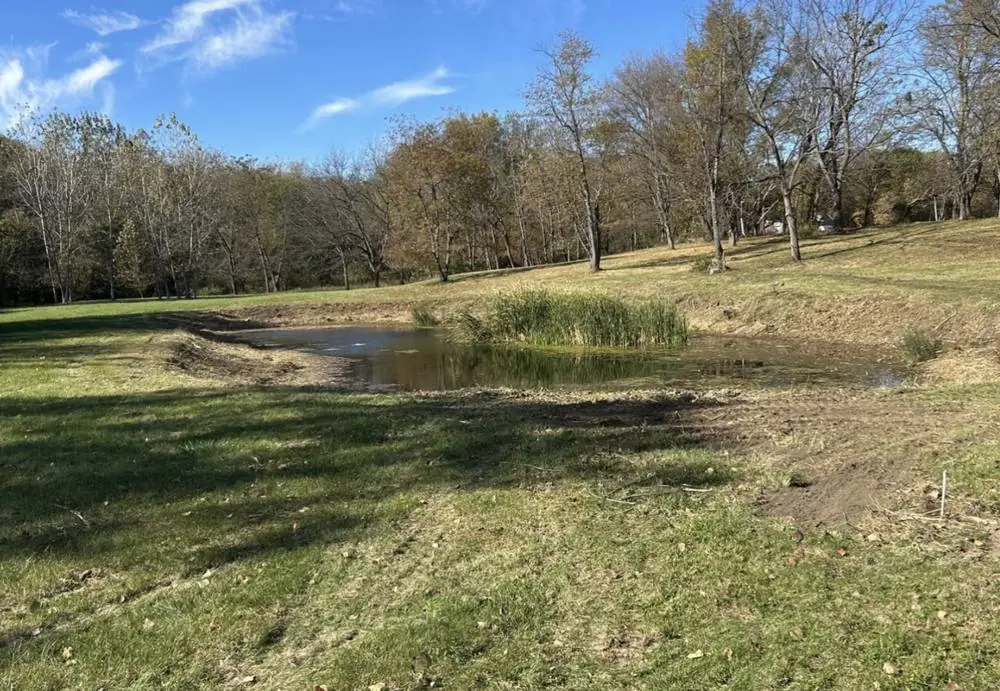 07
07Pond Building
New ponds dug and shaped, silted-in old ones cleaned back out.
Learn more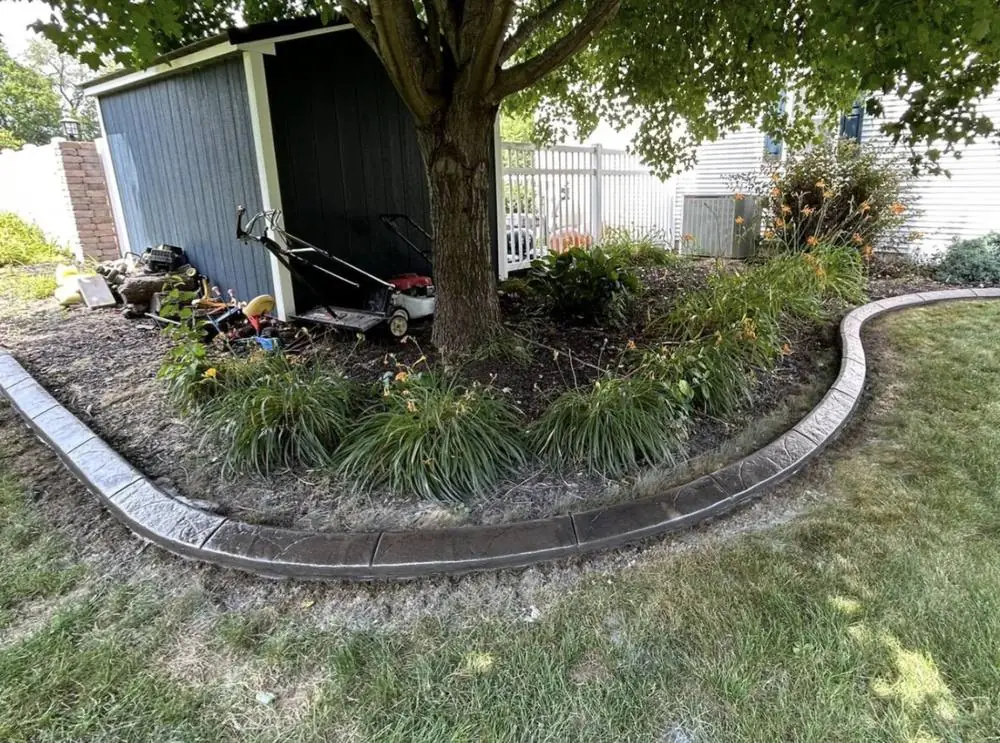 08
08Curbing & Landscape
Poured concrete edging and finish work to close a project out.
Learn more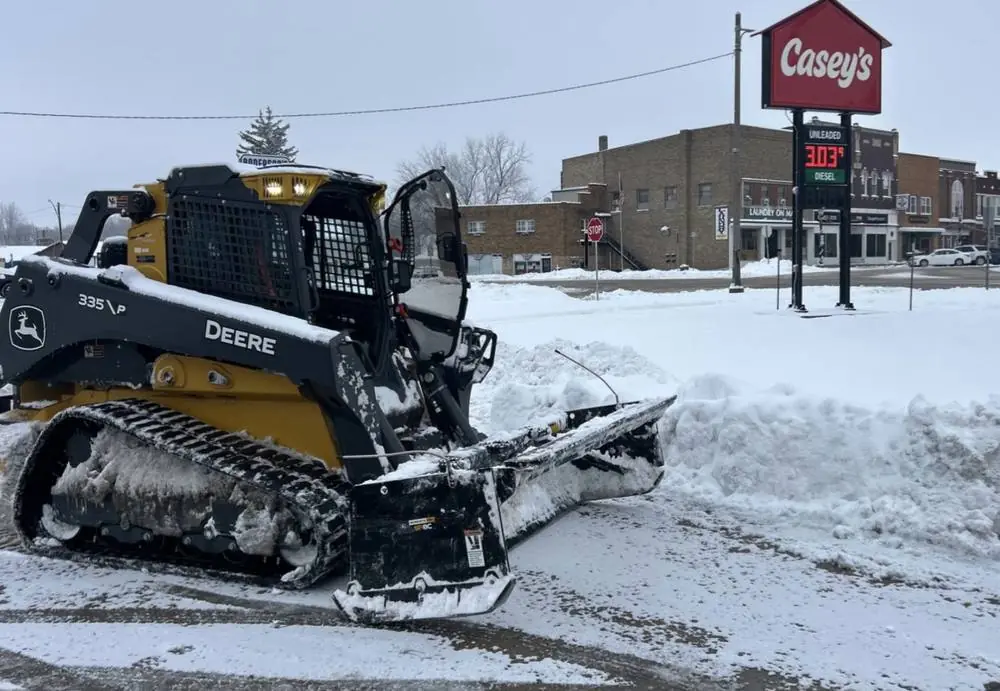 09
09Snow Plowing
Drives, lots and access lanes kept open through the winter.
Learn moreAlso: brush clearing for overgrown lots and fields. By town:
What people say after
Word for word from the OPS Google Business Profile. Recent jobs are on Facebook.
“James has done a wonderful job for us. He is timely, efficient and willing to travel where needed. You will not be disappointed.”
“OPS does what they say they’ll do, and do it efficiently and at a fair price. You’ll be glad you hired them.”
“James is a good communicator… he has some super equipment and for sure endeavors to do a great job. He recently rototilled some property for me… then planted it with oats and grass seed. Now it can rain all it wants!!”
“OPS did an amazing job on our property. We hired them to install a drainage system for our pool area, level the ground…”
Jobs, not stock photos
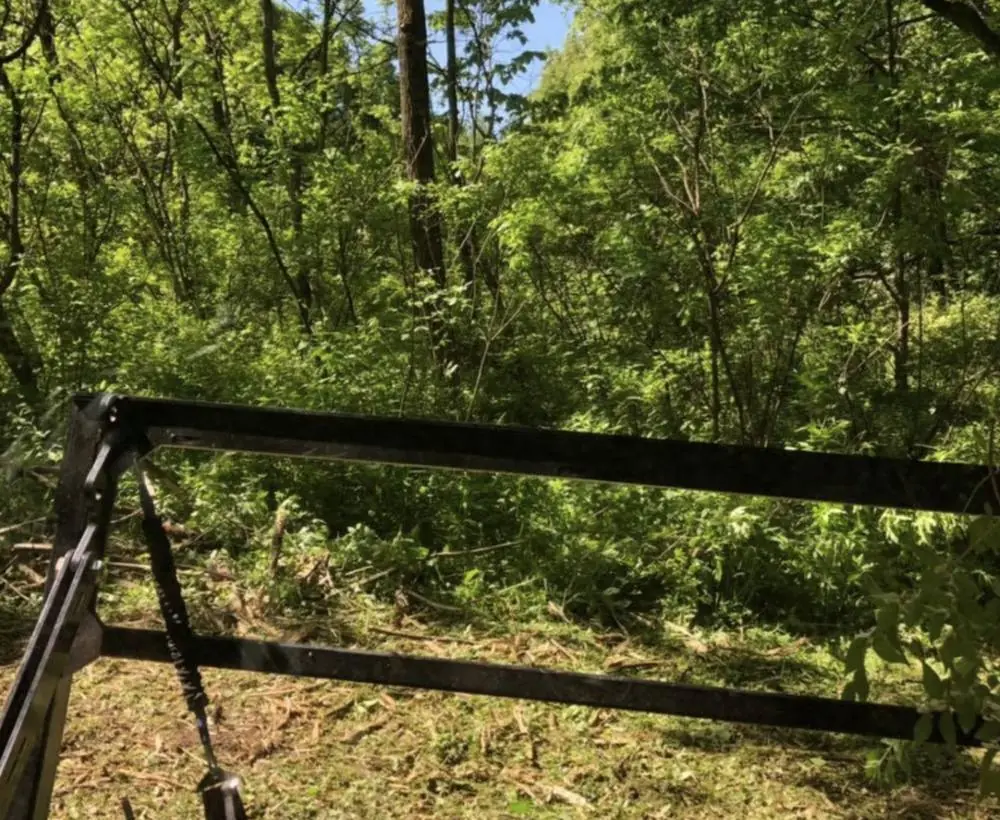
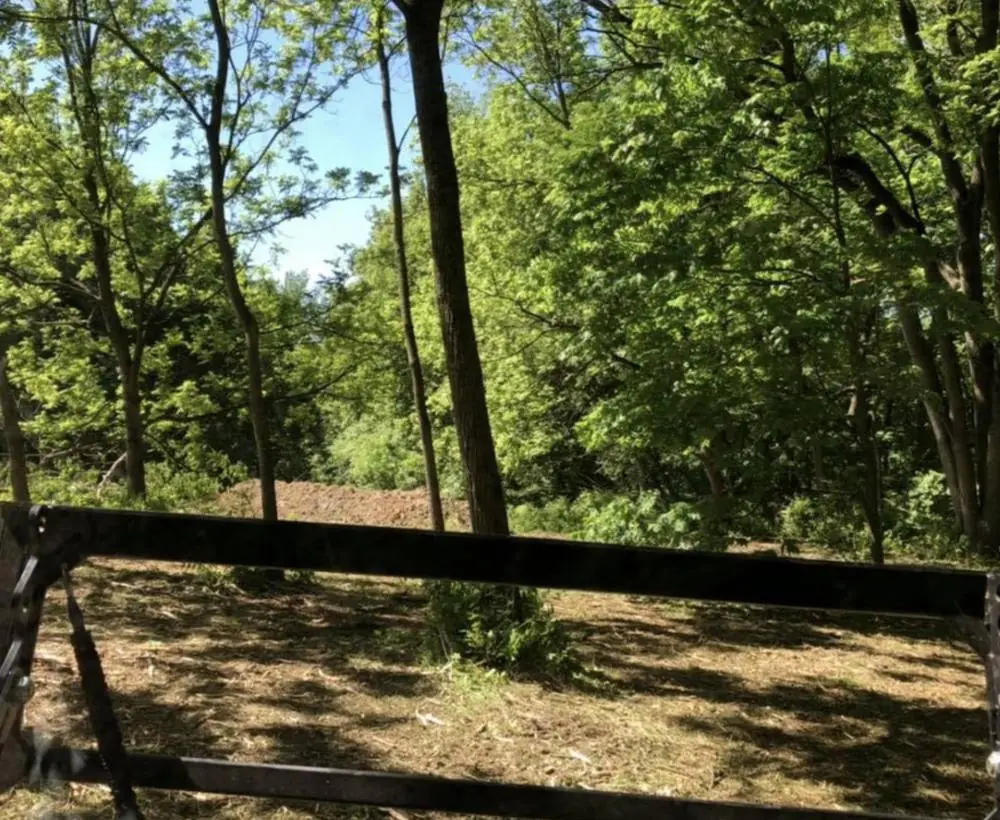
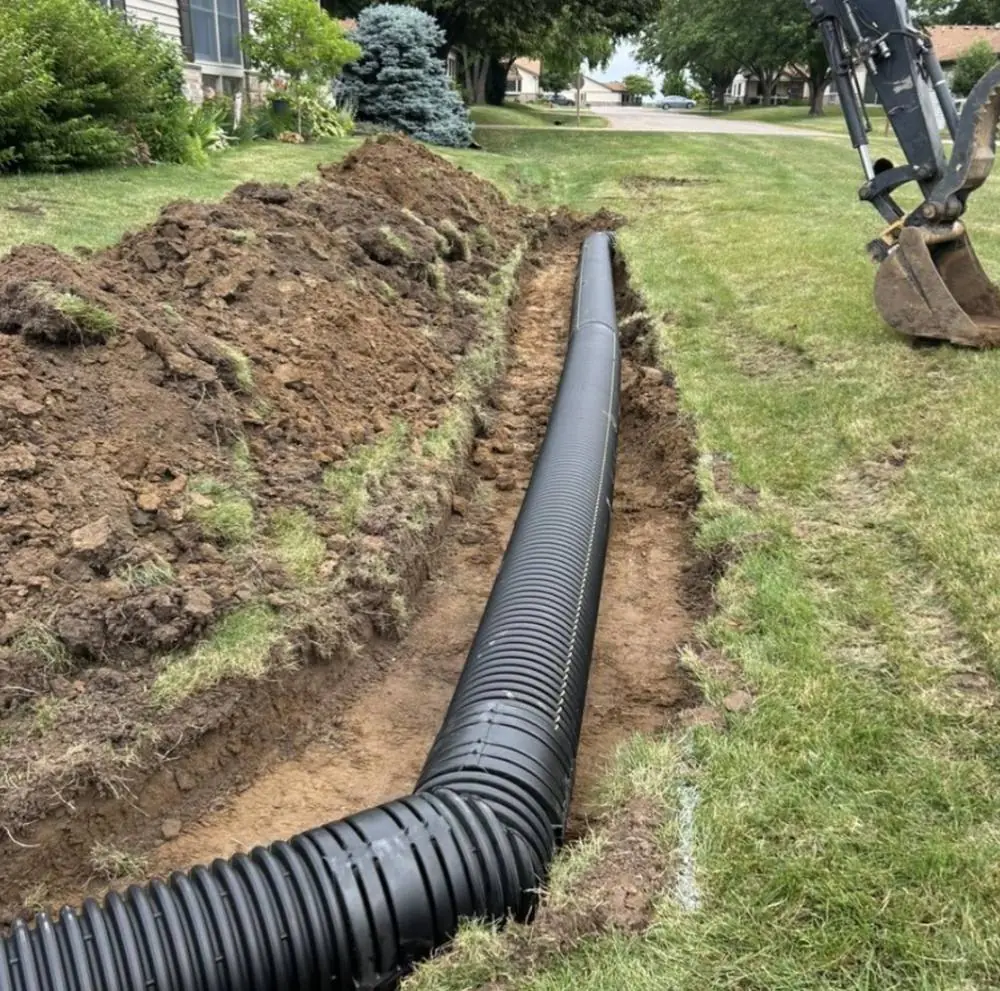
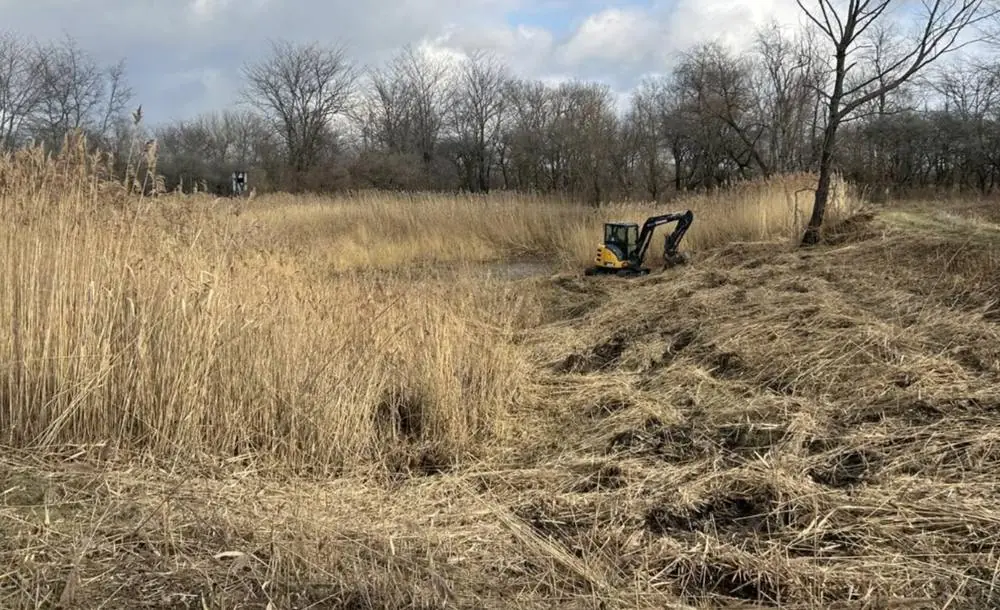
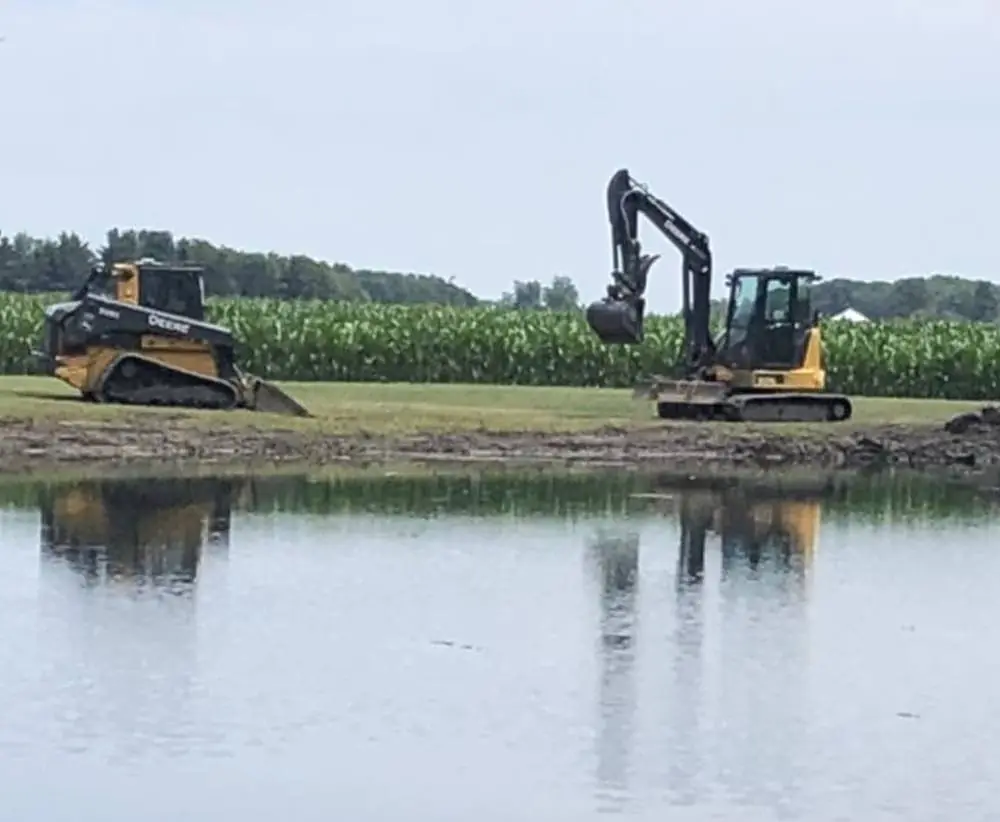
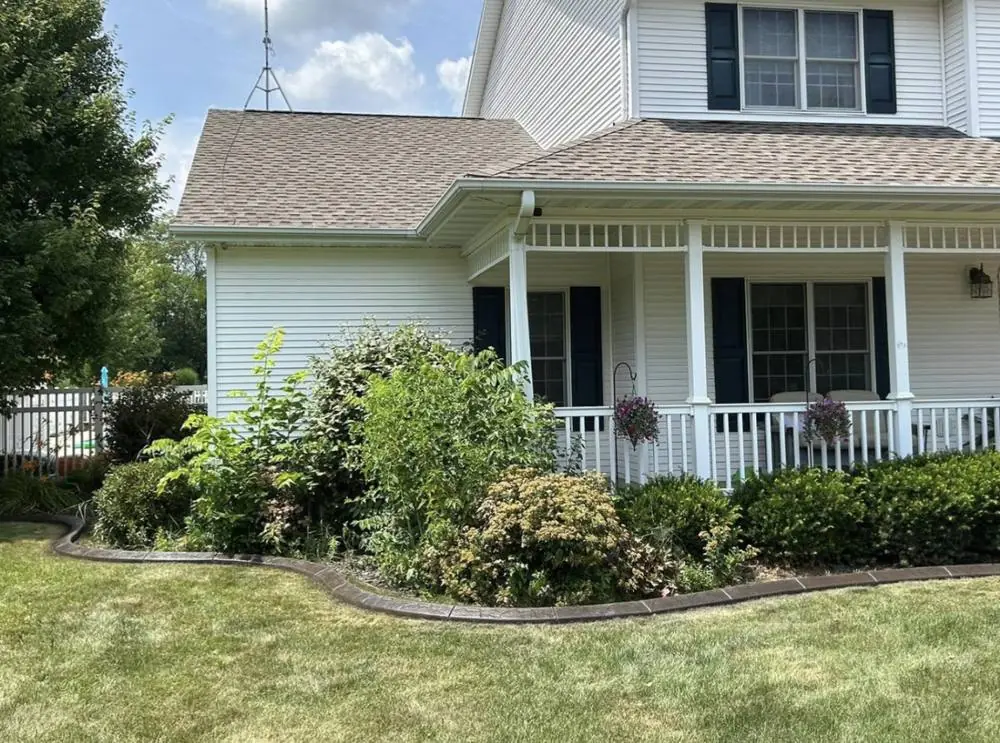
Every photograph on this site is a real OPS job. The pair below is the same gate, before and after.
Drag to look around
Get a free estimate
Tell us roughly how many acres, how thick it is, and whether a truck and trailer can get to it. That’s usually enough for a real number.
Straight to James. No call center.
Where the truck goes
Based in Ohio, Illinois. Regular work through the Illinois Valley, northwest to Sterling and Freeport, and west into the Quad Cities. Farther out is usually still a yes — ask.
Illinois Valley
Northwest IL & Quad Cities
Answers Before You Call
Plain answers on cost, ponds, driveways and clearing, written for Illinois Valley ground.
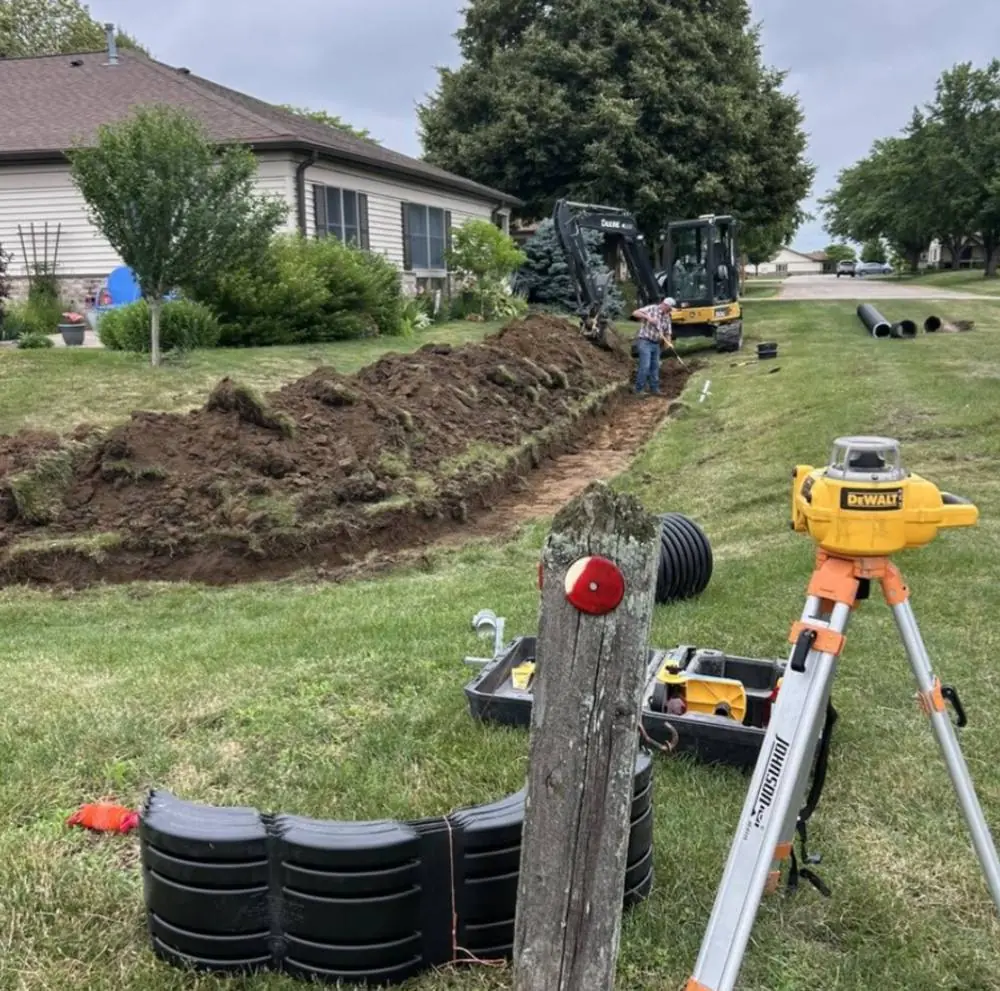
How Much Does It Cost to Build a Pond in Illinois?
The cost to build a pond in Illinois comes down to how much dirt has to move, what the soil will hold, and how the dam and overflow are built. Nobody can give you an honest number until they have walked the site, so the useful question is what drives the price on your ground.
Read the guide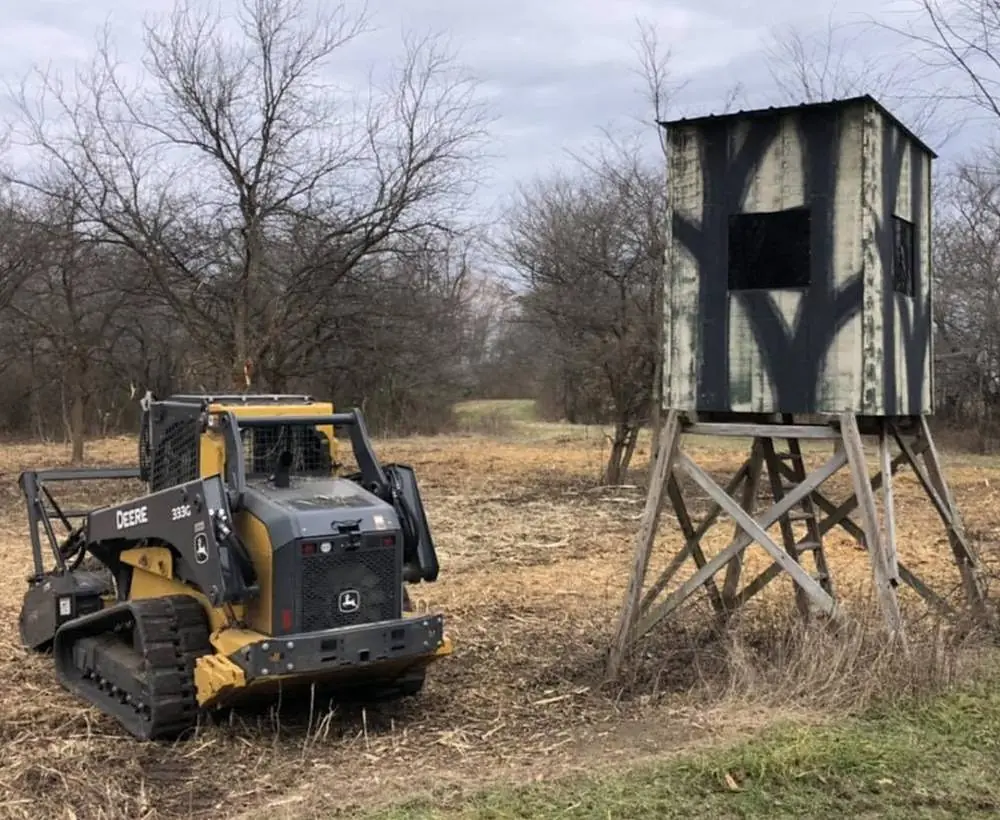
How Much Does Land Clearing Cost in Illinois?
Land clearing cost in Illinois depends on what is growing, whether stumps and roots have to come out, and what happens to the debris. The method you choose shapes the price as much as the acreage, so the right first step is deciding what the ground needs to be when the work is done.
Read the guideWhat Is Forestry Mulching? What It Does and Where It Stops
Forestry mulching is a way of clearing brush and small trees with one machine that cuts and grinds them where they stand, leaving the material as mulch on the ground. It clears land without burning, hauling or scraping the topsoil off, but it leaves roots in place.
Read the guide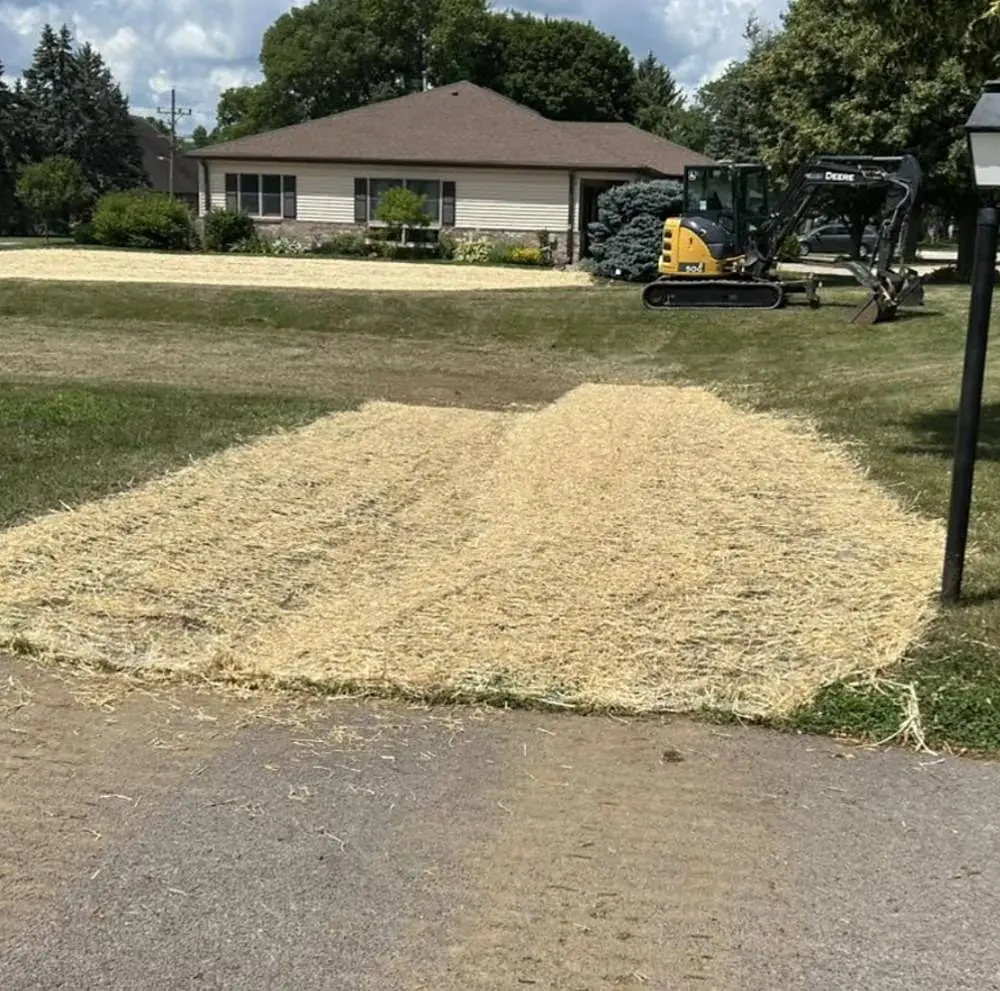
How to Fix a Gravel Driveway: Potholes, Washboard and Drainage
Most gravel driveway problems come from water and a lost crown, not from too little rock. Fix the shape and the drainage first, then add stone, and the repair holds.
Read the guide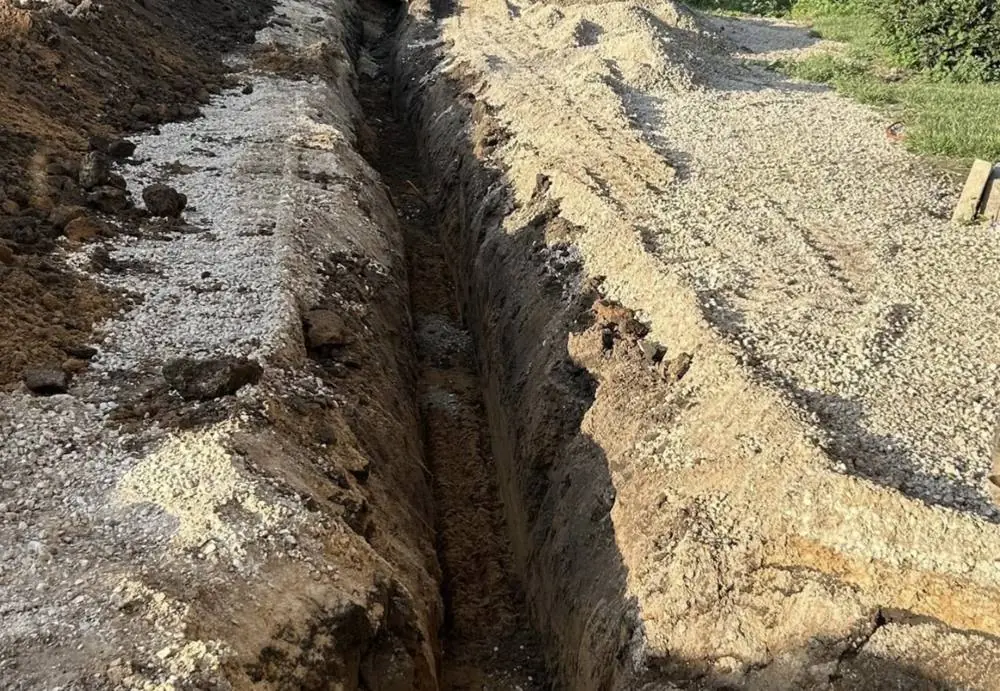
Yard Grading & Drainage: A Plain Guide for Homeowners
Water sits in a yard when the ground is shaped wrong, when the soil has packed hard, or when the water has nowhere to go. Most fixes start with grading the yard so it falls away from the house, then adding a drain only where shape alone cannot move the water.
Read the guideBush Honeysuckle Removal in Illinois: Clearing an Invasive Shrub
Bush honeysuckle is a non-native, invasive shrub that forms dense thickets in Illinois woods, fence rows and field edges. Clearing it means taking out the standing growth, then dealing with the resprouts and seedlings that follow.
Read the guideCommon Questions
See all questions or call (815) 240-9065.
- Cost GuideForestry Mulching Cost Per Acre in Illinois: What Moves the Price
- GuideBush Honeysuckle Removal in Illinois: Clearing an Invasive Shrub
- GuideWhat Is Forestry Mulching? What It Does and Where It Stops
- Cost GuideHow Much Does Land Clearing Cost in Illinois?
- GuideForestry Mulching vs. Traditional Land Clearing
What exactly is forestry mulching?
A tracked machine with a rotating drum head grinds standing brush, saplings and small trees down where they stand, and leaves the material on the ground as mulch. There are no burn piles, nothing gets hauled off the property, and because the machine isn’t scraping soil the way a dozer does, the topsoil stays where it is.
What does a job cost?
It depends on acreage, how thick the growth is, how big the material is, the terrain, and how hard the site is to get equipment into. Two properties of the same acreage can be a full day apart in work. That’s why estimates are free and why it’s worth looking at the ground rather than quoting off a map.
How far do you travel?
Regular work runs from the Illinois Valley north to Sterling and Dixon, east toward DeKalb, and west into the Quad Cities. Outside that, it’s still worth asking — travel for a job that justifies it isn’t a problem.
Do you work year-round?
Yes. Mulching and clearing carry on through the colder months, and winter is often the better time for it — the ground is firm, there are no leaves in the way, and you can see what you’re working with. Snow plowing runs through the same season.
Do you do brush clearing and bush hogging as well?
Yes. Where the growth is brush, saplings and thorny cover rather than timber, brush clearing or a bush hog pass often gets the ground usable for far less than full clearing. Heavier woody material goes to the mulcher instead. Describe what's growing and we'll tell you which one the job actually needs.
Got a piece of ground?
Tell us roughly how many acres, how thick it is, and whether a truck and trailer can get to it. That’s usually enough for a real number.