

Land Clearing in Peru & La Salle County
Clearing is what you want when the ground has to actually change — trees and root systems out, the site opened up and left workable rather than just knocked down.
- Free estimates
- Owner-run by James
- Illinois Valley to the Quad Cities
Land Clearing, step by step
- Fence rows and field edges
- Building sites and pasture
- Timber and recreational ground
- Brush clearing and bush hogging
- Not sure which one your property needs?
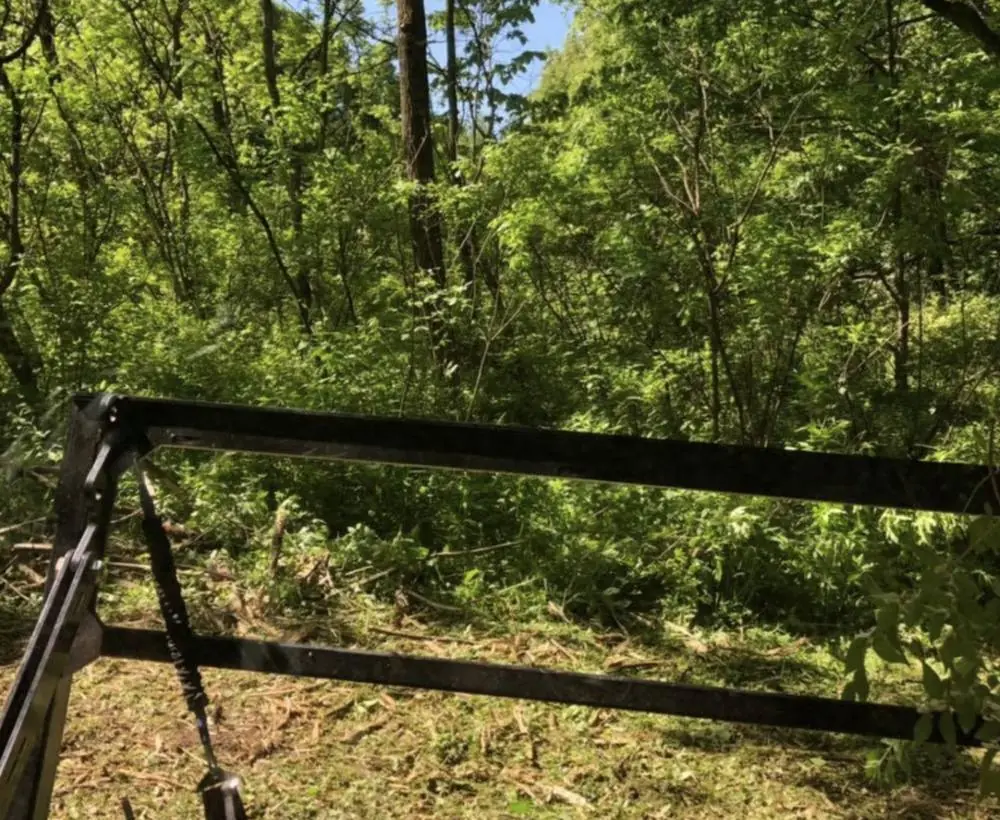
Fence rows and field edges
Row crop ground loses a few feet a year to whatever creeps in off the edges. Clearing a fence row back to the property line puts that acreage back into production and makes the field easier to work.
Building sites and pasture
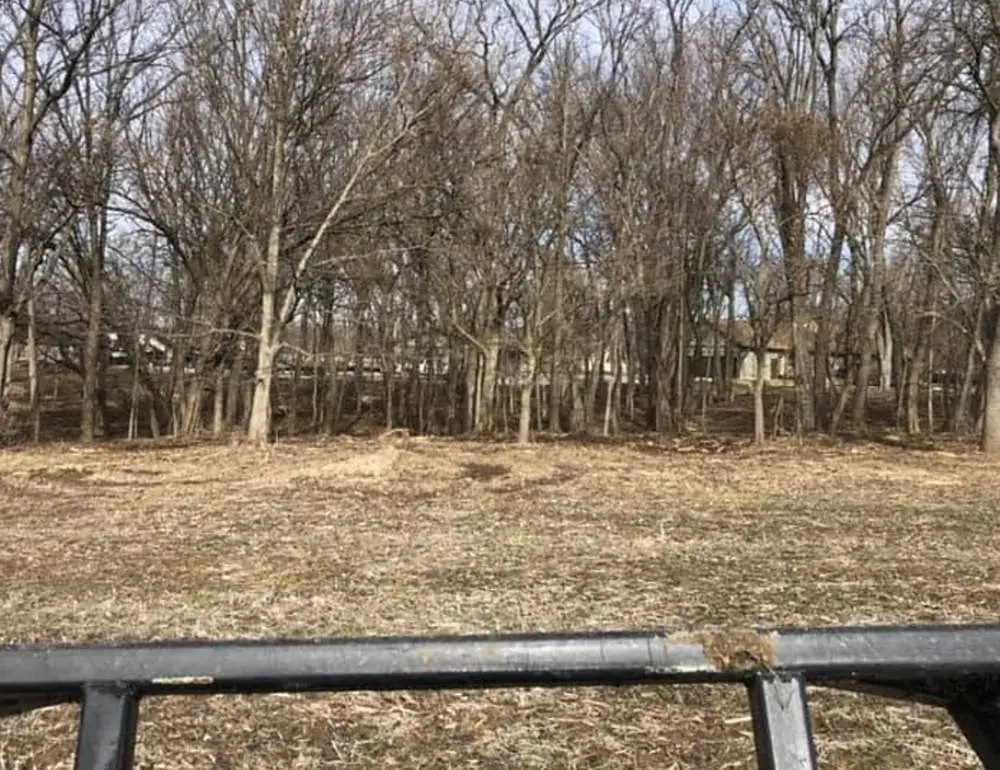
Wooded ground that has to carry a shed, a house, a paddock or a driveway needs the stumps and roots gone, not just the canopy. That’s clearing, and it usually runs straight into grading and site preparation on the same visit.
Timber and recreational ground
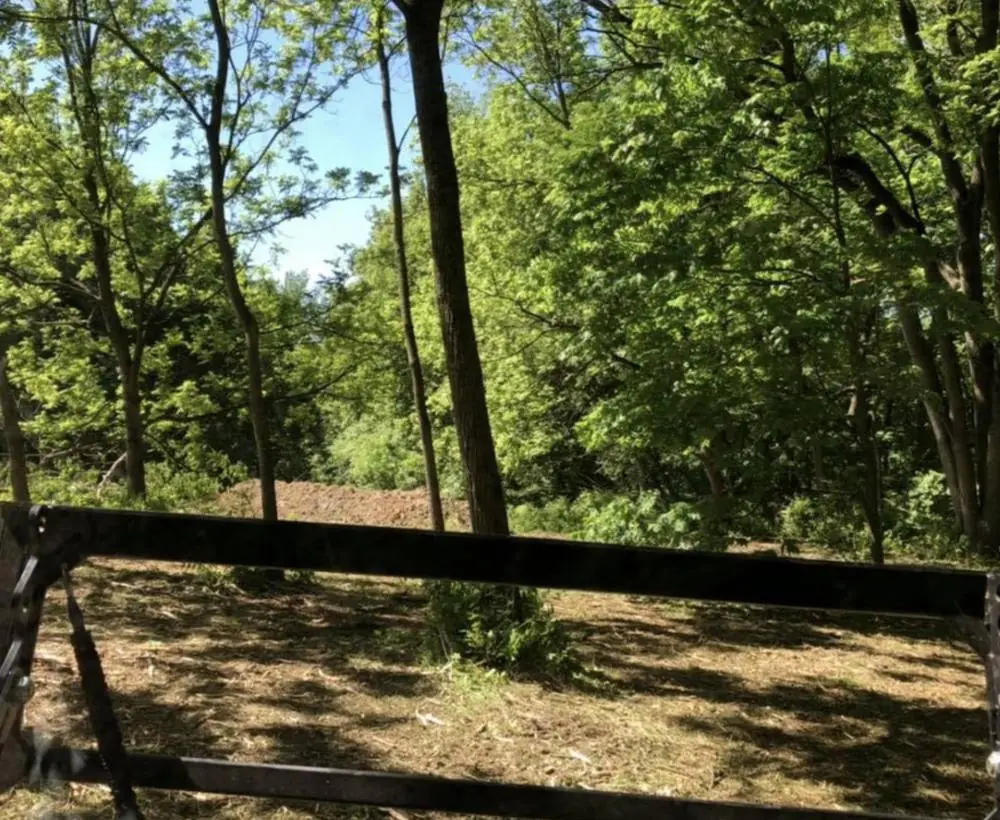
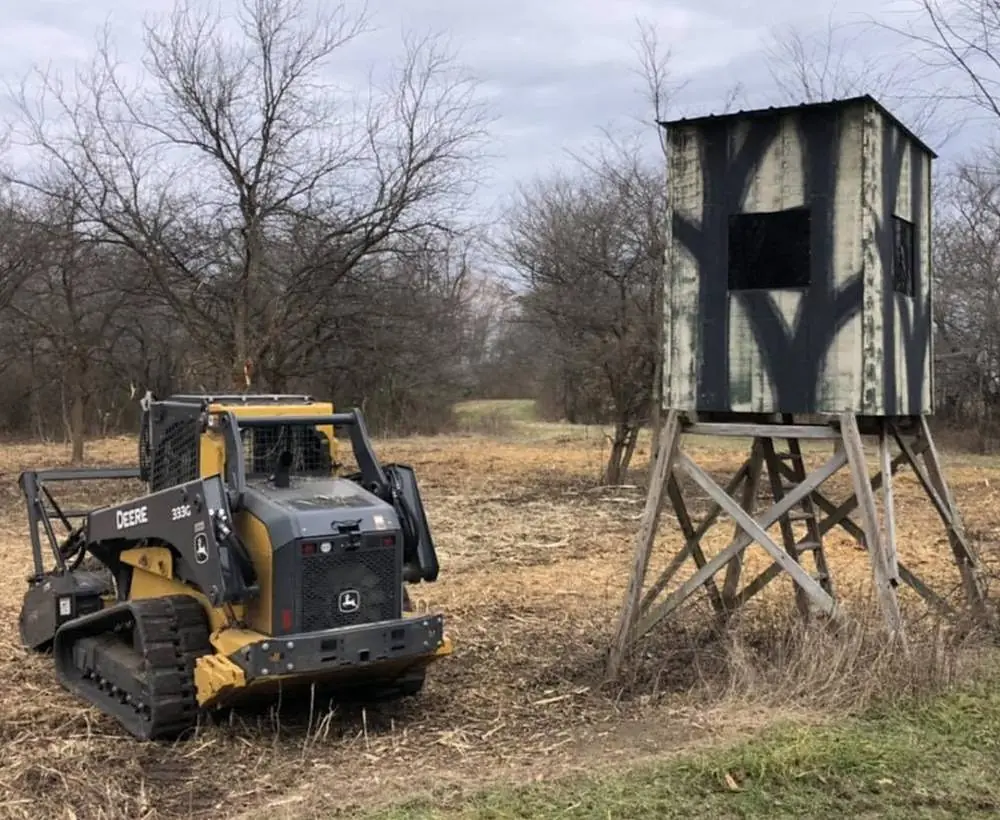
Opening shooting lanes, cutting trails, and taking out understory so the good timber has room. This is where most hunting-property work starts.
Brush clearing and bush hogging
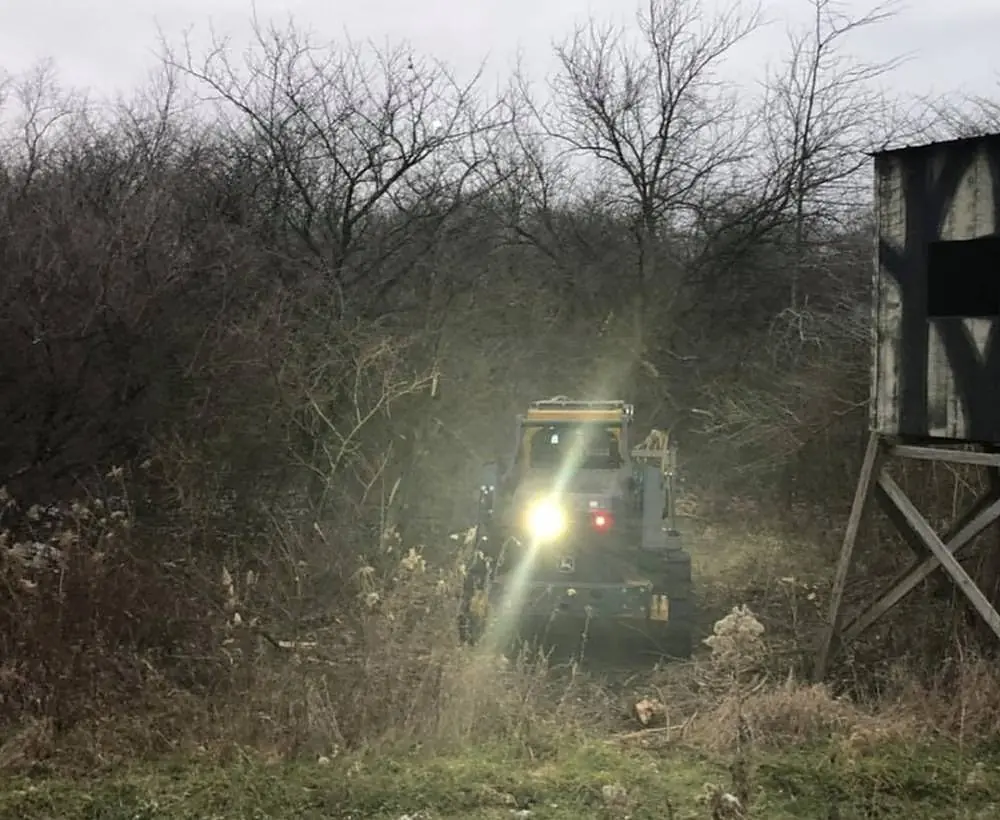
Not every job needs stumps out. Where the problem is head-high brush, saplings, multiflora rose or honeysuckle, brush clearing or a bush hog pass gets the ground usable again for a fraction of full clearing. Thicker material goes to the mulcher instead of a bush hog, and heavy stands of woody brush are usually a mulching job rather than a mowing one.
Not sure which one your property needs?
The short version: mulching grinds the material down where it stands and leaves it on the ground as cover. Traditional clearing pulls it out and hauls it off, and leaves bare dirt behind. Which one is right depends on the ground, what you want to do with it afterwards, and how much you want to spend. Here is the longer comparison.
Land Clearing near you
Regular work through the Illinois Valley, north to Sterling and Dixon and west into the Quad Cities. See the full service area.
Illinois Valley
Northwest IL & Quad Cities
Land Clearing questions
Not seeing yours? Call or text (815) 240-9065 and ask James, or read the common questions.
- Cost GuideHow Much Does Land Clearing Cost in Illinois?
- GuideForestry Mulching vs. Traditional Land Clearing
- Cost GuideForestry Mulching Cost Per Acre in Illinois: What Moves the Price
- Cost GuideHow Much Does It Cost to Build a Pond in Illinois?
- Cost GuideGravel Driveway Cost in Illinois: What Moves the Price
- Cost GuideHow Much Does Concrete Curbing Cost?
How is it different from having the ground bulldozed?
A dozer pushes everything into piles along with a good amount of your topsoil, and then you’re left dealing with the piles. Mulching leaves the ground intact and covered. The tradeoff is that mulching takes growth down at ground level — it doesn’t pull stumps or root systems out. If the site has to be dug into or built on, that’s land clearing or site preparation instead.
Do I need a permit to clear my own land?
In most of rural Bureau, La Salle and Lee counties, clearing brush and overgrowth on your own property doesn't require a permit. It can change if the ground is in a floodplain or wetland, is under a conservation or CRP agreement, or if the work affects a drainage district. If any of that applies to your property, check with your county before the work starts — we're not able to give that answer for you.
Do you do brush clearing and bush hogging as well?
Yes. Where the growth is brush, saplings and thorny cover rather than timber, brush clearing or a bush hog pass often gets the ground usable for far less than full clearing. Heavier woody material goes to the mulcher instead. Describe what's growing and we'll tell you which one the job actually needs.
How long does a job take?
Small jobs — a fence row, an overgrown lot, a driveway regrade — are often a day or less. An acre of heavy, mature growth takes considerably longer than an acre of light brush. You’ll get a realistic time estimate along with the price, not an optimistic one.
What does a job cost?
It depends on acreage, how thick the growth is, how big the material is, the terrain, and how hard the site is to get equipment into. Two properties of the same acreage can be a full day apart in work. That’s why estimates are free and why it’s worth looking at the ground rather than quoting off a map.
What usually goes with it
Most jobs start with the mulcher and end somewhere else. All services.
Forestry Mulching
Standing brush and saplings ground into cover in one pass. Nothing burned, nothing hauled.
Learn moreServiceSite Preparation
Ground stripped, cut and packed into a pad that will hold a building.
Learn moreServiceGrading & Land Leveling
Low spots filled, high spots cut, water sent where you actually want it.
Learn moreWhat people say after
Word for word from the OPS Google Business Profile. Recent jobs are on Facebook.
“James has done a wonderful job for us. He is timely, efficient and willing to travel where needed. You will not be disappointed.”
“OPS does what they say they’ll do, and do it efficiently and at a fair price. You’ll be glad you hired them.”
“James is a good communicator… he has some super equipment and for sure endeavors to do a great job. He recently rototilled some property for me… then planted it with oats and grass seed. Now it can rain all it wants!!”
“OPS did an amazing job on our property. We hired them to install a drainage system for our pool area, level the ground…”
From First Call to Usable Ground
Call or Text
Call or text (815) 240-9065 or send the form. Roughly how many acres, what is growing and whether a truck and trailer can get in.
We Look at the Ground
James looks at the ground before he gives you a number, so the estimate fits the job in front of him.
The Work Gets Done
We agree on what comes out and what stays. Then the machines go to work, with James running them.
Ground You Can Use
You are left with ground you can walk, mow, build on or farm, and the topsoil stays where it belongs.
Need land clearing?
Tell us roughly how many acres, how thick it is, and whether a truck and trailer can get to it. That’s usually enough for a real number.
Straight to James. No call center.
Got a piece of ground?
Tell us roughly how many acres, how thick it is, and whether a truck and trailer can get to it. That’s usually enough for a real number.