

Forestry Mulching Services in Peru & the Illinois Valley
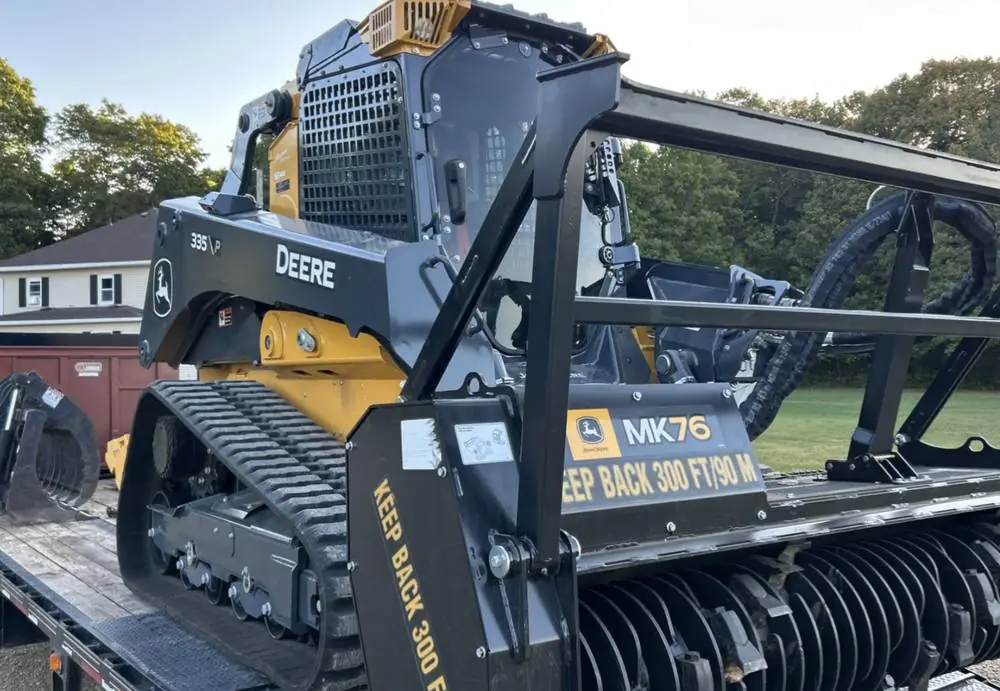
A tracked mulcher takes standing growth down and grinds it where it falls. No burn piles, no dumpsters, no convoy of trucks hauling material off your property — and the topsoil comes through it intact.
- Free estimates
- Owner-run by James
- Illinois Valley to the Quad Cities
Forestry Mulching, step by step
What it handles
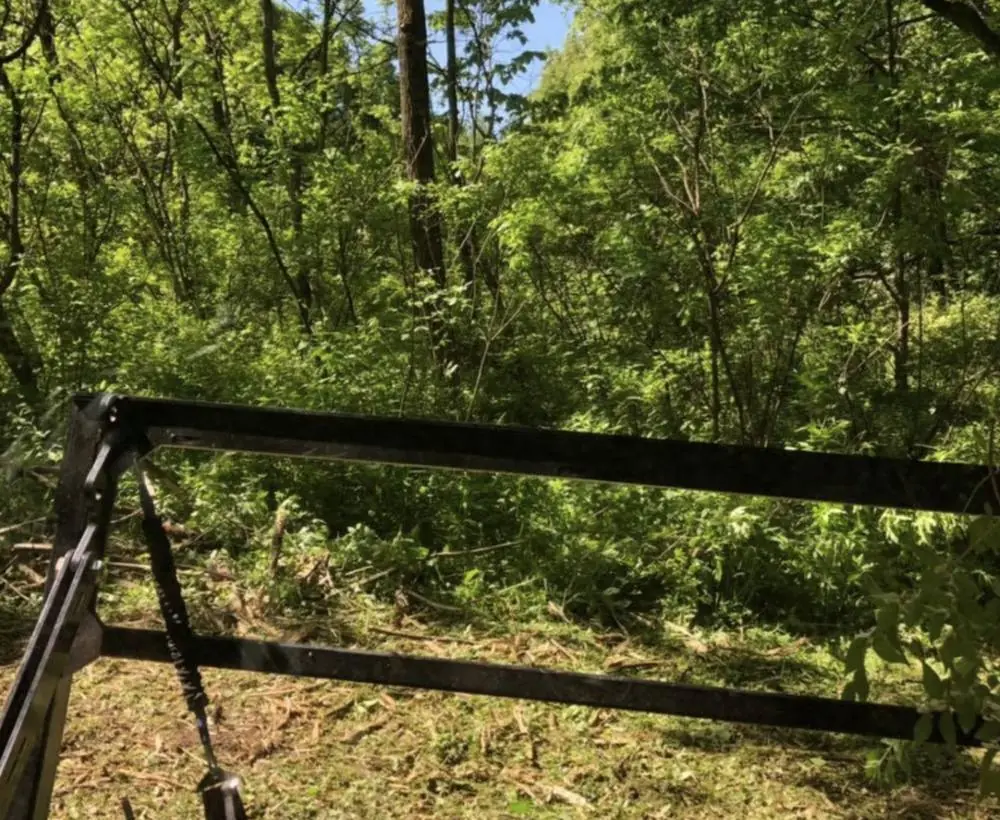
Brush, scrub, briars, saplings and small trees. The machine works through growth a person can’t walk into, and it does it without the ground being scraped bare the way a dozer and a burn pile would leave it.
What you’re left with
A layer of mulch sitting on undisturbed soil. That cover holds moisture, slows erosion on slopes, and breaks down into the ground over the following seasons. Most people walk it within a day of the machine leaving.
When it’s the wrong tool
Mulching takes growth down; it doesn’t remove stumps or root systems below grade. If you’re putting a building on it or need to turn soil, that’s land clearing or site preparation, and it’s a different machine and a different price.
Not sure which one your property needs?
The short version: mulching grinds the material down where it stands and leaves it on the ground as cover. Traditional clearing pulls it out and hauls it off, and leaves bare dirt behind. Which one is right depends on the ground, what you want to do with it afterwards, and how much you want to spend. Here is the longer comparison.
Forestry Mulching near you
Regular work through the Illinois Valley, north to Sterling and Dixon and west into the Quad Cities. See the full service area.
Forestry Mulching by town
Illinois Valley
Northwest IL & Quad Cities
Forestry Mulching on real jobs
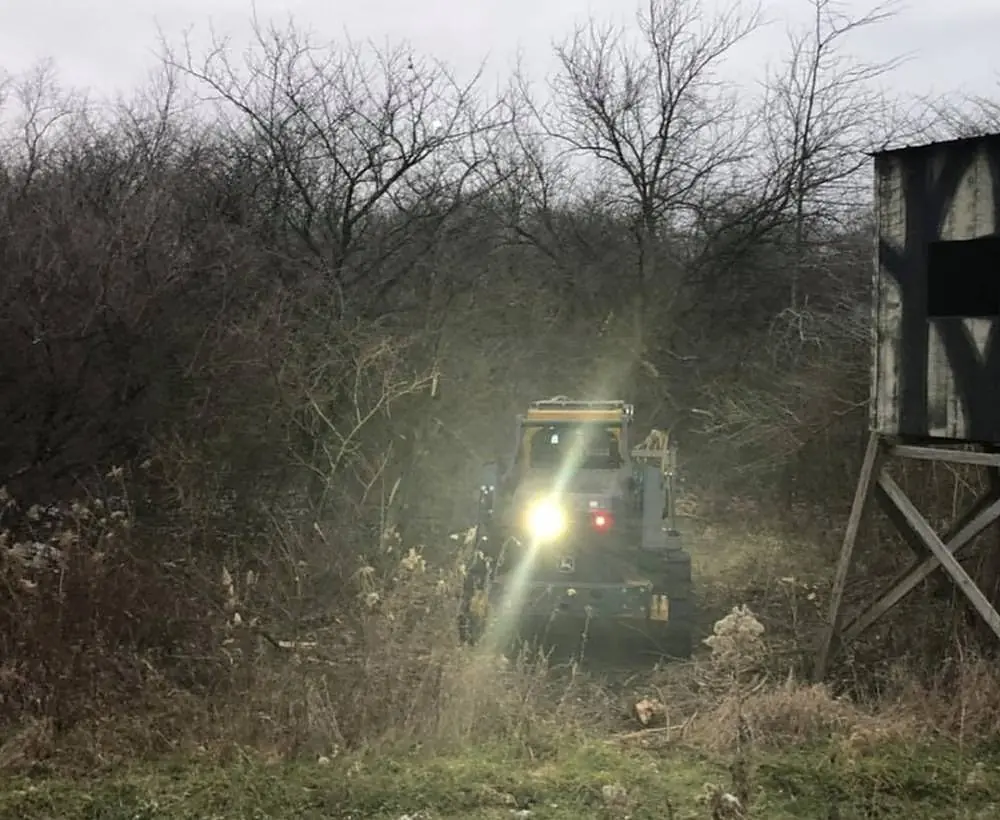
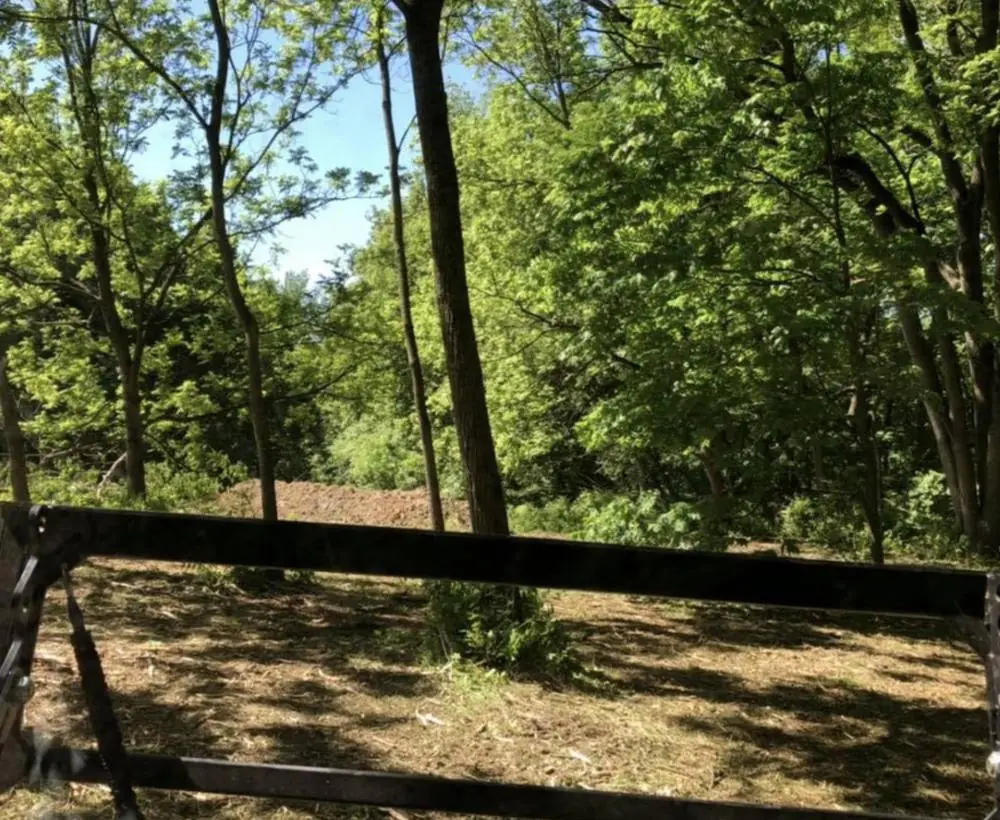
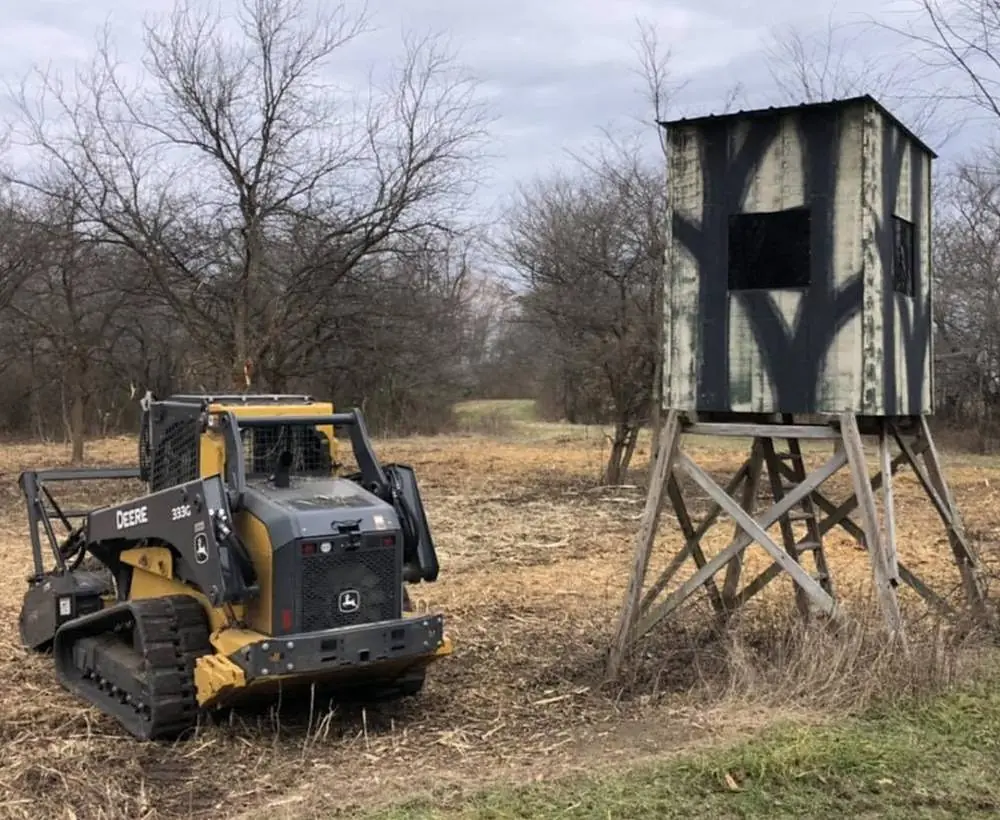
Every photo here is from a real OPS job. See more recent work.
Forestry Mulching questions
Not seeing yours? Call or text (815) 240-9065 and ask James, or read the common questions.
- Cost GuideForestry Mulching Cost Per Acre in Illinois: What Moves the Price
- GuideBush Honeysuckle Removal in Illinois: Clearing an Invasive Shrub
- GuideWhat Is Forestry Mulching? What It Does and Where It Stops
- Cost GuideHow Much Does Land Clearing Cost in Illinois?
- Cost GuideHow Much Does It Cost to Build a Pond in Illinois?
- Cost GuideGravel Driveway Cost in Illinois: What Moves the Price
What exactly is forestry mulching?
A tracked machine with a rotating drum head grinds standing brush, saplings and small trees down where they stand, and leaves the material on the ground as mulch. There are no burn piles, nothing gets hauled off the property, and because the machine isn’t scraping soil the way a dozer does, the topsoil stays where it is.
What are the downsides of forestry mulching?
Two real ones. It grinds material down at ground level rather than removing roots, so stumps and root systems stay in the ground — if you need to dig, build or plant into that ground, mulching alone won't get you there. And it leaves a layer of mulch on the surface, which is an advantage for erosion and weed suppression but not what you want if you were expecting bare dirt. Where either of those matters, land clearing is the right call instead.
How big of trees can you take with a mulcher?
Brush, saplings and small trees are what the machine is built for. Once trunks get past roughly eight inches the work slows down considerably and it usually makes more sense to drop those separately and mulch the rest. Tell us what the biggest material on the property looks like and we'll tell you honestly which approach fits.
What do I do with the ground after it's mulched?
Usually nothing urgent. The mulch layer holds soil in place over winter and breaks down through the following season. If you're putting the ground into pasture or a food plot, seed goes in after the layer has thinned enough for seed to reach soil — often the next spring. If you want it usable straight away, that's a conversation to have before the work starts, because it changes how the job is done.
What is the average cost per acre for forestry mulching?
Published per-acre figures are close to meaningless because the range is so wide — light brush on flat, open ground and a thick tangle of mature saplings on a slope are completely different days of work on the same acre. Density, stem size, terrain, and how easily the machine can get in all move the number more than acreage does. An honest per-acre price comes after somebody has looked at the ground, which is why the estimate is free.
What usually goes with it
Most jobs start with the mulcher and end somewhere else. All services.
Land Clearing
Wooded or neglected acreage opened back up for pasture, food plots, or a building site.
Learn moreServiceRight-of-Way Clearing
Fence rows, field edges, trails and utility corridors put back to passable.
Learn moreServiceSite Preparation
Ground stripped, cut and packed into a pad that will hold a building.
Learn moreWhat people say after
Word for word from the OPS Google Business Profile. Recent jobs are on Facebook.
“James has done a wonderful job for us. He is timely, efficient and willing to travel where needed. You will not be disappointed.”
“OPS does what they say they’ll do, and do it efficiently and at a fair price. You’ll be glad you hired them.”
“James is a good communicator… he has some super equipment and for sure endeavors to do a great job. He recently rototilled some property for me… then planted it with oats and grass seed. Now it can rain all it wants!!”
“OPS did an amazing job on our property. We hired them to install a drainage system for our pool area, level the ground…”
From First Call to Usable Ground
Call or Text
Call or text (815) 240-9065 or send the form. Roughly how many acres, what is growing and whether a truck and trailer can get in.
We Look at the Ground
James looks at the ground before he gives you a number, so the estimate fits the job in front of him.
The Work Gets Done
We agree on what comes out and what stays. Then the machines go to work, with James running them.
Ground You Can Use
You are left with ground you can walk, mow, build on or farm, and the topsoil stays where it belongs.
Need forestry mulching?
Tell us roughly how many acres, how thick it is, and whether a truck and trailer can get to it. That’s usually enough for a real number.
Straight to James. No call center.
Got a piece of ground?
Tell us roughly how many acres, how thick it is, and whether a truck and trailer can get to it. That’s usually enough for a real number.